
Wild Caves vs. Show Caves: Understanding Two Very Different Underground Experiences
For many people, their first curiosity about caves starts the same way: What is it actually like down there? Darkness, stone, stillness, maybe a hint of mystery.
What often comes as a surprise is that not all cave experiences are the same. Around the world, caves are accessed and interpreted in very different ways, depending on their geology, conservation needs, and history of human use. Two of the most common categories you’ll hear are show caves and wild caves. This isn’t a competition between the two. Both have value. Both play an important role in education, conservation, and access. But they offer very different ways of interacting with the underground world — and understanding that difference helps set better expectations before stepping below the surface.
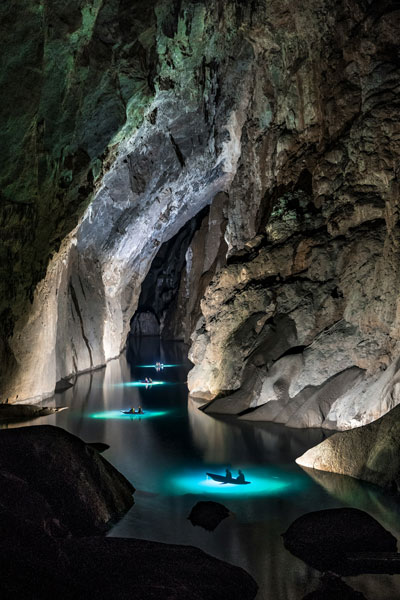
Two paths underground
At a high level, the difference between show caves and wild caves comes down to how humans interact with the cave environment.
Show caves are developed to allow large numbers of people to safely visit sensitive underground spaces with minimal training. Wild caves, by contrast, are kept as close to their natural state as possible, with minimal infrastructure and a strong emphasis on conservation, skills, and personal responsibility.
Both approaches exist because caves themselves are incredibly fragile — shaped over hundreds of thousands to millions of years, yet easily damaged in moments.
Show caves: access, interpretation, and preservation through infrastructure
Show caves are often the first underground experience people ever have — and for good reason.
They typically include:
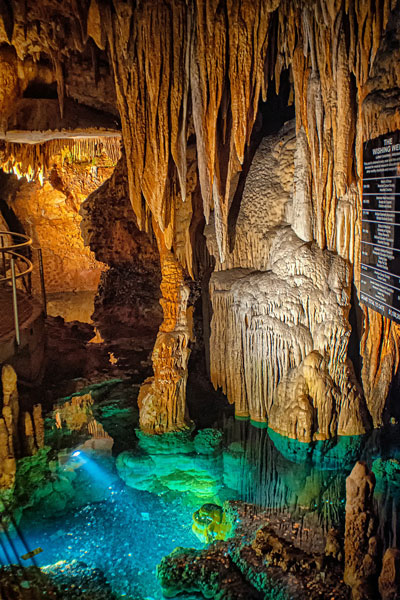
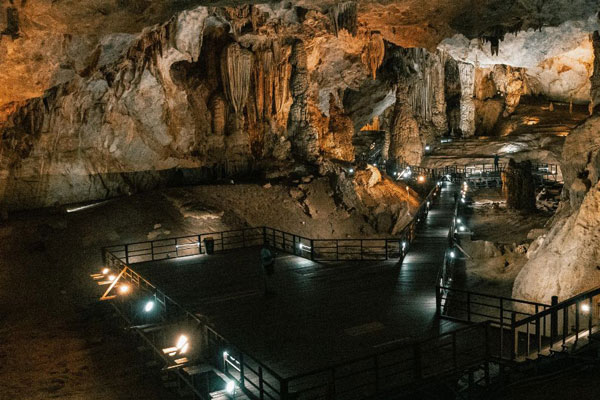
- Installed lighting systems
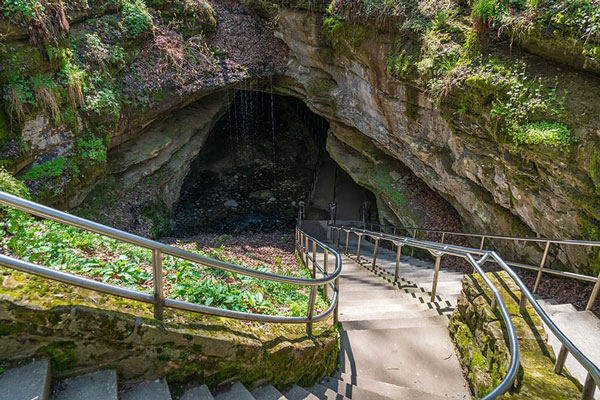
- Constructed walkways, staircases, and railings
- Designated routes that visitors must stay on
- Guided interpretation focused on geology, history, and formations
The infrastructure fundamentally shapes the experience. Visitors move through the cave rather than within it. The pace is steady, the environment predictable, and the physical demands relatively low.
This approach has real benefits:
- It allows a wide range of visitors to safely experience caves
- It concentrates foot traffic onto hardened paths
- It protects sensitive areas from direct contact
- It makes interpretation accessible and consistent
In show caves, conservation is achieved largely through controlled movement. You don’t touch formations. You don’t leave the path. The cave is presented as something to observe rather than navigate.
For many people, this is exactly the right introduction — a chance to see underground landscapes that would otherwise be inaccessible.
Wild caves: minimal impact, maximum responsibility
Wild caves take a very different approach.
In a wild cave, the priority is preserving the cave’s natural state. That means:
- No installed lighting
- No constructed walkways
- No railings or staircases
- Minimal permanent modification, if any
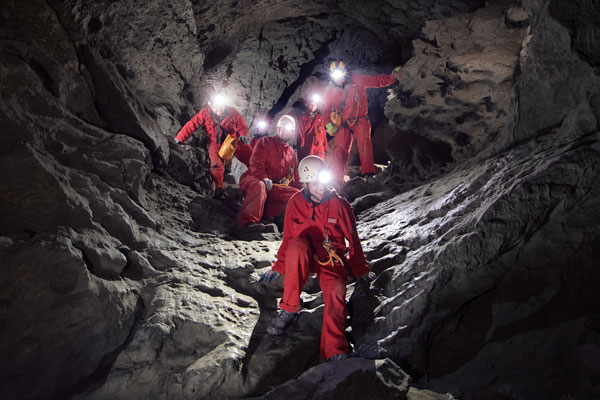
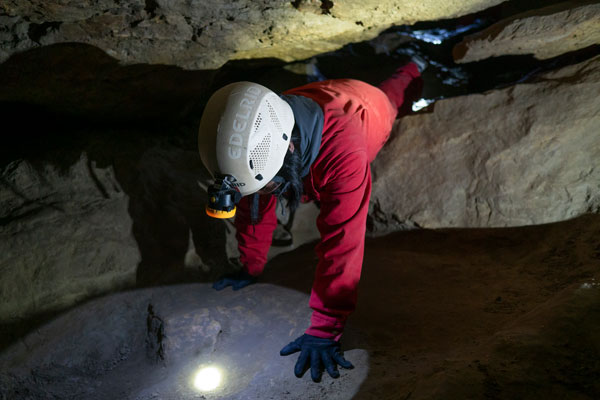
Movement through a wild cave is dictated by the cave itself — uneven floors, tight passages, vertical drops, and natural obstacles. Visitors must actively engage with the environment, often using helmets, headlamps, harnesses, and rope systems.
Rather than being passive observers, participants become part of the cave’s story, making decisions about where to step, how to move, and how to minimize impact.
Because of this, wild caves require:
- Smaller group sizes
- Specialized training or guiding
- Strong conservation ethics
- A slower, more deliberate pace
The experience is immersive, physical, and often deeply memorable — but it also demands respect. In wild caves, conservation isn’t enforced by infrastructure; it’s upheld by behavior.
How the experience feels different
One of the clearest distinctions between show caves and wild caves is how they feel to be in.
In show caves:
- Lighting defines what you see
- Sound is often amplified by open chambers
- The route is fixed
- The experience is largely observational
In wild caves:
- Darkness is complete without your headlamp
- Silence is more profound
- Movement is intentional and varied
- The cave reveals itself gradually
Neither experience is inherently better — but they serve different purposes.
Show caves excel at broad education and accessibility. Wild caves excel at fostering a deeper, more personal connection to the underground environment.
Conservation: shared goals, different methods
Caves are non-renewable environments on a human timescale. Once damaged, many features will not recover.
Show caves and wild caves both aim to protect these spaces, but they do so differently.
Show caves rely on:
- Physical barriers
- Controlled lighting
- Defined visitor routes
Wild caves rely on:
- Education and training
- Low-impact techniques
- Strict group management
- Ongoing monitoring
In both cases, conservation is the foundation — not an afterthought. The methods simply reflect different philosophies of access.
Where Rat’s Nest Cave fits in
Rat’s Nest Cave, located near Canmore, Alberta, is considered a wild cave.
It has no installed lighting or walkways, and its formations, passages, and features remain largely in their natural state. Access is carefully managed, and tours are designed to balance exploration with preservation.
Guided trips through Rat’s Nest focus on:
- Small group sizes
- Proper equipment and techniques
- Education about cave geology and conservation
- Respectful movement through the cave
For visitors, this means the experience feels more exploratory than theatrical. You’re not walking through a lit corridor — you’re moving through a living geological system, learning how to travel responsibly in a fragile environment.
Understanding the difference between wild and show caves helps clarify what kind of experience Rat’s Nest offers, and why it’s approached the way it is.
Choosing the right underground experience
Show caves and wild caves aren’t opposing ideas. They’re complementary.
Show caves introduce people to underground landscapes in a safe, accessible way. Wild caves offer deeper immersion for those ready to take on more responsibility and adventure.
Knowing the difference allows visitors to choose experiences that align with their comfort level, curiosity, and values — and to better appreciate the care required to protect these extraordinary places.
For those interested in learning more about the history, exploration, and significance of Rat’s Nest Cave specifically, Under Grotto Mountain by Charles J. Yonge offers a detailed and thoughtful look at the cave and its exploration history.
Whether your curiosity starts with a lit pathway or a headlamp beam cutting through darkness, the underground world has a way of leaving a lasting impression — especially when approached with understanding and respect.



